Flexible packaging films face sudden dynamic impacts during distribution—snack bags dropping from shelves, pharmaceutical pouches jostling in cross-border shipping, or personal care sachets being compressed on high-speed sorting lines. If film toughness is inadequate, pinhole leaks can impair barrier performance, while seal failure can release product and cause costly recalls. Impact resistance is therefore a key indicator of whether a flexible package can survive real-world distribution.
A pendulum impact tester quantifies this property. By simulating film rupture under dynamic loading, it provides comparable, traceable energy data for incoming material inspection and finished-goods quality control in food, pharmaceutical, and personal care applications.
The test principle is simple: a hemispherical striker moves at controlled velocity and punctures a clamped film specimen, measuring the energy absorbed at rupture. The film is held flat in an annular fixture, the pendulum is released from a preset angle, and the striker hits the center. The energy required to break the film is reported as pendulum impact resistance.
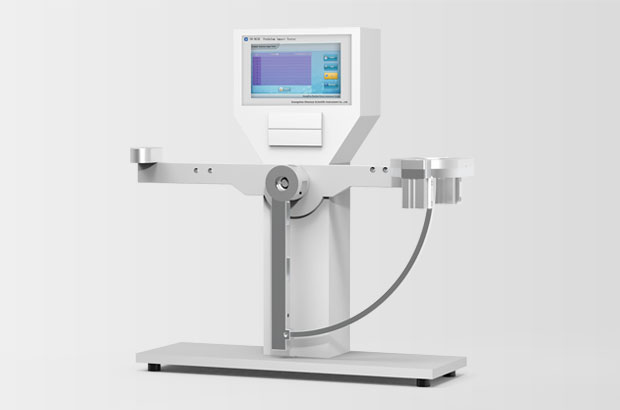
Instruments usually offer selectable ranges—commonly 1 J, 2 J, and 3 J—by changing weights, with resolution down to 0.001 J, covering monolayer polyethylene to multilayer laminates. Pneumatic clamping and release reduce operator variability, while a horizontal auxiliary plane minimizes error. Standard practice tests ten valid specimens per group and averages the results. The pre-lift angle is typically 150°, impact velocity is constant, and geometric parameters follow relevant standards for repeatability and comparability.
Choose the standard required by the buyer or destination market.
ASTM D3420 — USA
Standard test method for pendulum impact resistance of plastic film. Procedure A uses 60 mm specimens; Procedure B (Spencer) uses 89 mm specimens. Data from the two procedures are not comparable. There is no known ISO equivalent.
GB/T 8809 — China
Applies to plastic films up to 0.25 mm thick; composite films may refer to it. It defines A and B methods with different striker and fixture combinations. The revision adds low-temperature testing, C/C2 strikers, and requires discarding specimens that slip.
NF T54-116 — France
Pendulum impact method for plastic films. Uses 100 × 100 mm or Ø100 mm specimens and a hemispherical striker, typically Ø38.1 mm. Reports energy in joules and records rupture appearance—clean tear, stretching, or shattering.
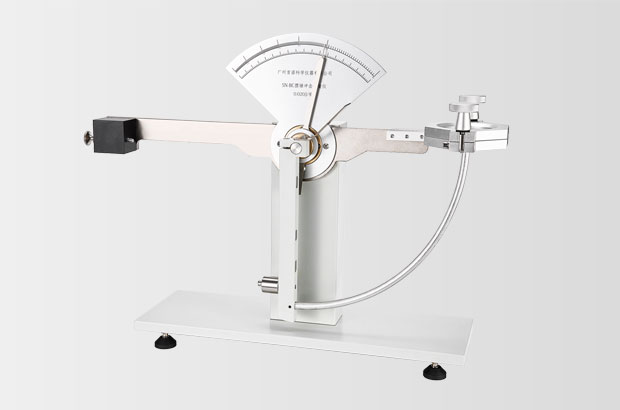
A well-configured tester can support multiple standards by changing strikers and fixtures. Confirm geometry and fixture compatibility with the supplier before purchase.
Selecting the right instrument is not merely a purchasing decision—it is a matter of aligning test requirements, standard compliance, and budget.
A pendulum impact tester turns film toughness into a traceable energy value linked to drop, compression, and vibration resistance in real distribution. Select the instrument around the required standard—GB/T 8809, ASTM D3420, or NF T54-116—and maintain routine calibration. For export projects, confirm the buyer’s standard before purchase.
Previous article:This is already the first article
Next article:What Is a Heat Seal Tester? A Practical Guide for Flexible Packaging Labs
Back
What Is a Heat Seal Tester? A Practical Guide for Flexible Packaging Labs
21.09.2026
How to Choose a Bottle Cap Torque Tester: Range, Accuracy, Standards & Best Practices
14.09.2026
Packaging Solvent Tester – Detect Odors Before They Reach Your Client
07.09.2026
Package Leak Tester: Stop Costly Leaks Before They Happen
31.08.2026Scan
Add WhatsApp
Email
info@snlabtester.com
Business Inquiry
+86 13316049470
Free Hotline
+86 020-26221916