Can one gas chromatograph simultaneously cover both EN 13628 and ASTM F1884? The answer is equally clear: yes, but only on the premise that the FID remains standard and unchanged, the column is selected according to the solvent coverage of EN 13628, and the detector expansion port is reserved only for mass spectrometry, not for ECD.
The difference between the two standards lies not in the “detection principle” but in solvent coverage and method positioning. EN 13628 (the -1/-2 series) is aimed at quantification of known solvents in flexible packaging and covers solvents on the order of about 19–21 species, including alcohols, ketones, esters, aromatics, and other categories; ASTM F1884 is positioned for residual solvents released from packaging materials under given temperature-time conditions and involves 10 typical printing solvents. The common baseline at the detector level for both is the flame ionization detector (FID), while in terms of column selection and the necessity of a mass spectrometry interface, the trade-off logic needs to be recalibrated around these two standards.
The 10 solvents involved in ASTM F1884 are mainly solvents common in printing processes, including methanol, ethanol, isopropanol, n-propanol, methyl ethyl ketone, ethyl acetate, benzene, methyl isobutyl ketone, toluene, and others. The carbon number and polarity span of these components are not extreme, and a conventional nonpolar or weakly polar capillary column with appropriate temperature programming can resolve the main adjacent peak pairs.
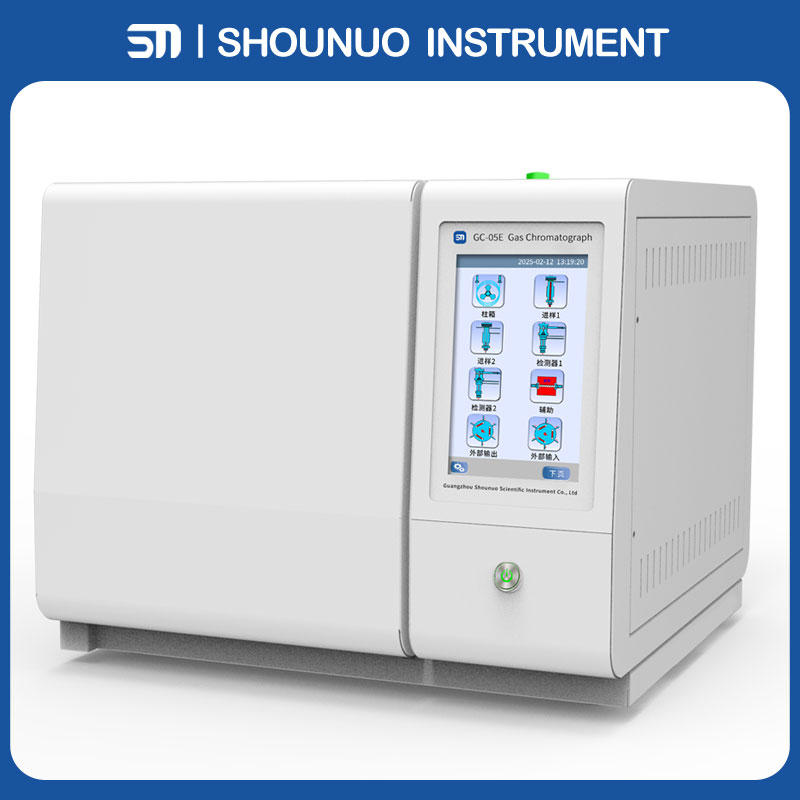
The coverage of EN 13628 is clearly broader. Taking the solvents listed in EN 13628-2, the industrial method, as an example, in addition to the above basic solvents, it also includes acetone, isopropyl acetate, methyl isobutyl ketone, 1-propanol, 2-methyl-1-propanol, 1-methoxy-2-propanol, 1-butanol, 1-ethoxy-2-propanol, 2-methoxy-1-methylethyl acetate, 2-ethoxyethanol, 2-ethoxyethyl acetate, 3-methoxy-1-butanol, and others. The boiling points and polarity distribution of these alcohol ethers and alcohol ether esters are denser, and on the same chromatogram they place higher demands on the retention capacity of the column and the fineness of temperature programming than ASTM F1884.
If an instrument is initially configured with a column and method only for the 10 solvents of ASTM F1884, and later a food flexible packaging customer requires data according to EN 13628, what is first exposed is not FID sensitivity but the retention and separation margin of the column for alcohol ether components. This point needs to be locked in at the procurement stage.
The standard configuration of ASTM F1884 explicitly uses an FID detector, headspace injection, and a DB-5 column (30 m × 0.25 mm × 1 µm). Conventional detection in the EN 13628 series is also based on FID, using static headspace gas chromatography for quantification of known residual solvents. The solvents covered by both standards—alcohols, ketones, esters, and aromatics—all fall within the mature response range of FID, and FID is not the bottleneck.
The notable difference lies in qualitative capability. ASTM F1884 explicitly encourages the use of mass spectrometry or other suitable techniques in the standard text to identify or verify unknown volatile compounds. This means that when the alcohol ether solvents of EN 13628 are qualitatively questionable on FID due to matrix interference or adjacent components, mass spectrometry is a solution path recognized within the standard framework. Therefore, the priority of reserving a mass spectrometry interface in the host architecture is higher than any other detector expansion.
In the solvent lists covered by these two standards, no component must rely on an electron capture detector (ECD) to meet quantification requirements. The detection of alcohols, ketones, esters, and benzene series does not constitute an ECD application scenario. Reserving an ECD interface for “possible future scope expansion” pays a premium for gas lines and interfaces in exchange for a detector slot that remains idle for a long time. FID as standard, mass spectrometry interface reserved, and ECD not reserved for these two standards—the judgment remains unchanged.
ASTM F1884 points relatively clearly to the column: DB-5, 30 m × 0.25 mm × 1 µm. This is a nonpolar/weakly polar stationary phase, suitable for conventional separation of alcohols, esters, ketones, and aromatics in printing solvents. In the application practice of EN 13628, 30 m-class nonpolar or weakly polar capillary columns are also common, such as TG-1MS 30 m × 0.32 mm × 3.0 µm or similar specifications. The two standards do not require a polyethylene glycol column, nor do they require the multi-stage stepped temperature programming designed in GB 31604.60 to forcibly resolve 25 high-density solvents.
But this does not mean the column oven can be downgraded. The alcohol ether solvents of EN 13628 are sensitive to the stability of the initial column temperature. If the column oven has insufficient temperature control accuracy in the low-temperature range (e.g., 40–50 °C), or if the repeatability of the temperature programming slope is insufficient, the retention times of components such as 1-methoxy-2-propanol and 2-ethoxyethanol will drift from batch to batch, and the calibration curve will need to be rebuilt repeatedly. Although ASTM F1884 has fewer solvents, its headspace conditions usually involve heating at 90 °C; during method switching, the cooling efficiency of the column oven from the higher headspace temperature back to the low initial state also depends on the oven volume and temperature control capability.
Therefore, column length and column type can be compromised—a 30 m nonpolar column is a reasonable common starting point for both standards, and there is no need to configure a separate column for either standard—but the lower temperature control limit, volume, and temperature programming repeatability of the column oven cannot be compromised at procurement.
Method switching between the two standards is not simply “changing a temperature program.” The 10 solvents of ASTM F1884 can be separated in a relatively short time, and the single-run cycle is relatively compact. Because EN 13628 has more alcohol ether components, the column oven needs to complete separation and return to initial temperature over a wider temperature range, and the single-run cycle will be longer.
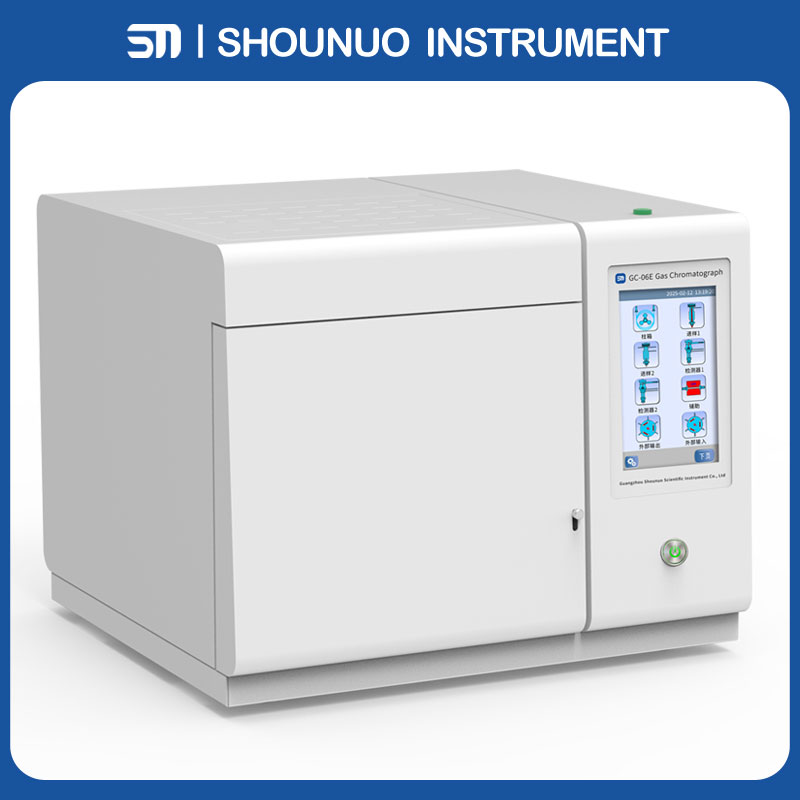
More critically, the column conditions need to be equilibrated. Switching from the column temperature conditions of ASTM F1884 to the initial state of EN 13628 requires at least 2–3 column volumes of carrier gas purging and one blank baseline confirmation. Calibration curves cannot be shared across methods. Each switch requires re-establishing calibration with the solvent mixed standard of the new standard, plus blank and spike validation. A complete switch-validation cycle typically involves effective labor time on the order of several hours. If ASTM F1884 and EN 13628 alternate frequently in orders, the cost of instrument and labor occupied by method switching will accumulate rapidly.
It is recommended to schedule production centrally by customer or order batch, rather than having one instrument run both methods mixed throughout all time periods. If an enterprise serves both the U.S. and European markets, a more reasonable division of labor is: one host platform provides hardware compatibility for both methods, but in scheduling, the standards are run in batches to avoid frequent switching diluting column efficiency and validation resources.
For cases mainly based on ASTM F1884 with EN 13628 as auxiliary, or where the customer allows outsourced testing: a single FID, a 30 m nonpolar column (such as DB-5 or an equivalent stationary phase), and a column oven capable of executing the temperature programs of both standards are sufficient. The budget should be prioritized for column oven temperature control stability and headspace sampler repeatability, not for detector expansion ports.
For cases where both standards require in-house reports, or customer audits involve European flexible packaging compliance: on the basis of a single FID + 30 m nonpolar column, the host architecture should reserve a mass spectrometry interface. This is not to purchase a mass spectrometer immediately, but the inlet and gas path platform should support later installation of a quadrupole mass spectrometer without replacing the entire front end. ASTM F1884 itself leaves standard space for mass spectrometric qualitative analysis, and the alcohol ether solvents of EN 13628 also need this path when FID qualitative confirmation is questionable.
For export food contact materials, or where customers simultaneously require ASTM F1884 screening and EN 13628 quantification: configure FID and mass spectrometry in parallel. FID undertakes routine batch screening and quantification, while mass spectrometry undertakes positive confirmation, unknown peak identification, and qualitative evidence in customer audits. The complete meaning of “one instrument covering both standards” is two detection channels on one host platform divided by business function, rather than a single-FID instrument barely covering all scenarios at the edge of sensitivity.
Require the supplier to run your actual packaging samples, not pure solvent standards, on the same host and the same 30 m nonpolar column according to the conditions of ASTM F1884 and EN 13628 respectively. Record at least three sets of data:
First, under the EN 13628 mode, whether the resolution of components with close retention behavior among alcohol ether solvents (such as the adjacent peak pairs of 1-methoxy-2-propanol and 1-butanol, or 2-ethoxyethanol and 2-ethoxyethyl acetate) reaches an acceptable level for the method.
Second, after switching from ASTM F1884 conditions to EN 13628 conditions, the shift in retention time of early-eluting components (such as methanol or ethanol) in the first standard injection relative to before switching.
Third, after switching from EN 13628 back to ASTM F1884, the column oven cooling time and baseline stabilization time required for the system to return to ASTM conditions.
If the supplier can only demonstrate ASTM F1884 and EN 13628 separately using two instruments with different configurations, or refuses to provide bidirectional switching data on the same column, then “one instrument covering both” lacks a factual basis in engineering. If this set of data cannot be obtained, the configuration trade-off can only remain at the level of paper specifications.
Previous article:This is already the first article
Next article:Plastic Film Tensile Testing Machine Selection: Grips and Extensometer First
Back
Plastic Film Tensile Testing Machine Selection: Grips and Extensometer First
26.10.2026
OTR/WVTR Testing: Reliable Data Across Brands & Methods
19.10.2026
Pendulum Impact Tester for Flexible Packaging Film Toughness
08.10.2026
What Is a Heat Seal Tester? A Practical Guide for Flexible Packaging Labs
21.09.2026Scan
Add WhatsApp
Email
info@snlabtester.com
Business Inquiry
+86 13316049470
Free Hotline
+86 020-26221916