A bottle of tablets clumps together inside its container because moisture got in. An IV bag develops a pinhole after sterilization. A bag of chips quietly loses its nitrogen flush on a supermarket shelf.
These seem like small problems. But in the food and pharmaceutical packaging industries, they can lead to batch recalls, regulatory penalties, and permanent damage to your brand. Seal integrity is the lifeline of your product. And the key equipment that protects that lifeline is the leak tester — also called a package leak tester or seal integrity tester.
Let's look at three realistic scenarios that happen every day in factories around the world — from Europe and North America to Southeast Asia and the Middle East.
Food manufacturer : A nut brand experienced micro-leaks caused by product contamination in the heat seal area. Within three months, the company received 17 consumer complaints about rancid odor. Two production batches had to be pulled from retail shelves. Direct losses exceeded USD 120,000, and the brand's online rating dropped from 4.9 to 4.6.
Pharmaceutical packaging supplier : An effervescent tablet in an aluminum-plastic blister pack developed invisible cracks because of inconsistent heat seal strength between the PVC film and aluminum foil. During transport, moisture entered the blister, the tablets expanded, and the entire batch was rejected. Estimated loss: nearly USD 300,000.
Medical device manufacturer : A disposable sterile syringe pouch had pinholes along the seal edge that were invisible to the naked eye. After sterilization, microorganisms entered the package. A hospital quality inspection found contamination. The supplier was blacklisted and barred from bidding on contracts for three years.
The common thread? The leak points were far too small to be seen by the human eye, and the consequences were large enough to destroy an order, a customer relationship, or even a company.
The solution is simple: add one more step to your production line — leak testing using a reliable package leak tester.
A leak tester, also called a package leak detector or seal integrity tester, is a laboratory or production-line instrument designed to evaluate the sealing performance of packaging containers. It simulates pressure, vacuum, or immersion conditions to detect leaks, pinholes, weak seals, and other integrity defects.
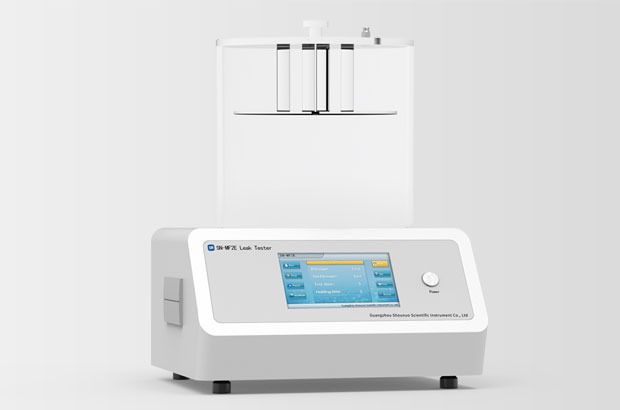
Compared with manual visual inspection, a leak tester offers four key advantages:
For food, beverage, pharmaceutical, medical device, cosmetics, and electronics packaging, leak testing has moved from a "nice-to-have" to a mandatory quality control step.
There are several leak test methods on the market, each with different principles, strengths, and limitations. Choosing the wrong method can result in either missed defects or false rejects. Here are the four most common methods and where they work best.
The sample is submerged in water inside a vacuum chamber. The chamber is then evacuated. If the package has a leak, internal gas escapes through the defect and forms a visible stream of bubbles.
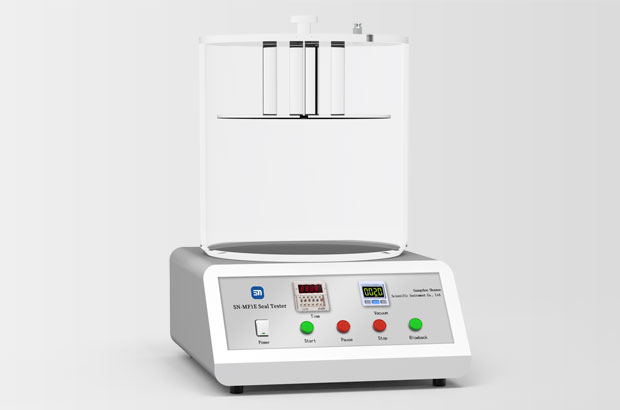
Pros: Intuitive, inexpensive, easy to operate.
Cons: Requires water immersion, so the sample may be wetted; results are qualitative rather than quantitative; less sensitive to very small leaks.
Best for: Flexible packaging such as plastic bags, aluminum foil pouches, laminated film pouches, and many food packages. This is the most widely used method for daily food packaging QC.
Common reference standards: ASTM D3078 (flexible packages), ISO 11607 (medical packaging).
The package is either inflated with gas or tested using its existing internal pressure. The package is then submerged in water to observe bubbles, or connected to a pressure sensor to monitor pressure drop.
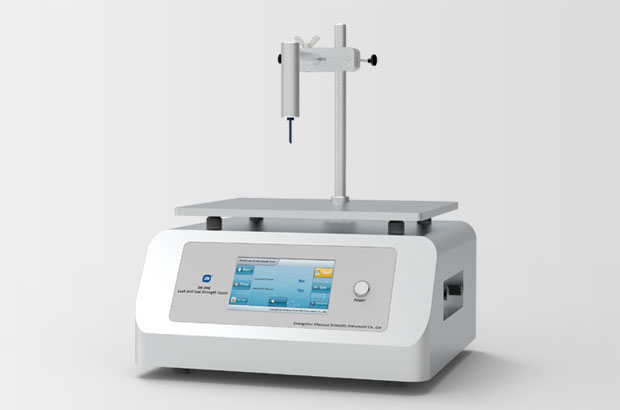
Pros: Simulates real internal pressure conditions for pressurized packages such as chip bags, nitrogen-flushed coffee packs, and carbonated beverage bottles.
Cons: Usually requires puncturing or inflating the package, making it a destructive test.
Best for: Flexible packages with internal gas, bottle caps, aerosol cans, carbonated soft drink bottles, and rigid containers.
Common reference standards: ASTM F2096 (pressurized bubble test), ASTM F1140 (burst and creep).
The package is placed inside a sealed test chamber. The chamber is evacuated to a set vacuum level, then the vacuum valve is closed. The pressure inside the chamber is monitored over time. If the package leaks, gas escapes and causes the pressure to rise.
Pros: Non-destructive, extremely sensitive (detects micro-holes as small as 5 μm), provides quantitative leak rate data, and can be fully automated.
Cons: Higher equipment cost; chamber volume and package geometry must be matched carefully.
Best for: Pharmaceutical packaging, sterile medical device packaging, pre-filled syringes, vials, ampoules, IV bags, blister packs, and other high-barrier applications. This is the fastest-growing method in the pharmaceutical packaging industry and is recognized by USP <1207> and ASTM F2338.
Positive or negative pressure is applied to the package, held for a set time, and the pressure change is measured. No water bath is needed.
Pros: Dry, fast, easy to integrate into production lines for 100% inline testing.
Cons: More effective on rigid packages; flexible packages may require special fixtures.
Best for: Bottles, jars, cans, PET containers, HDPE bottles, and metal cans.
Choosing the right method depends on your package type, product sensitivity, production speed, and regulatory requirements.
Many food manufacturers already own a leak tester but still experience leaks. The problem is rarely the instrument itself — it's how the instrument is used.
Testing only 3 samples per hour cannot cover batch defects caused by temperature drift on the heat seal bar. We recommend testing at least every 15 minutes, and always after film changes, shift changes, or machine restarts.
The vacuum level and hold time must be adjusted according to the packaging material and product characteristics. For high-barrier aluminum foil pouches, for example, a vacuum of at least −80 kPa and a hold time of 30 seconds or more is needed. Otherwise, slow micro-leaks may not produce visible bubbles.
A leak tester answers the question: "Does it leak?" A heat seal strength tester answers: "How strong is the seal?" Both must be used together. A package may not leak at the factory, but if the seal strength is low, it can fail during transport.
Powders, liquids, and solid contents can absorb pressure changes or temporarily block micro-holes, producing false negatives. Always test with actual product or a suitable simulant whenever possible.
Choose a food package leak tester with digital pressure display and automatic timing. Create a written SOP. Verify instrument sensitivity regularly using calibrated leak standards (e.g., 30 μm or 50 μm orifice plates).
In the pharmaceutical industry, container closure integrity directly affects drug stability, sterility, and patient safety.
The USP <1207> series on container closure integrity testing and EU GMP Annex 1 requirements have driven a major shift away from traditional dye ingress and microbial challenge tests toward deterministic, instrument-based methods such as vacuum decay.
Key reasons for this shift:
When selecting a leak tester for pharmaceutical packaging, pay special attention to:
If your products are exported to Europe or North America, select equipment that aligns with ASTM F2338 (vacuum decay), ISO 11607 (sterile medical device packaging), and USP <1207> requirements.
| Package Type | Recommended Method | Key Parameters |
| Flexible pouches, laminated films | Vacuum bubble test | Vacuum ≥ −90 kPa, chamber size |
| Gas-flushed packs (chips, nitrogen coffee) | Positive pressure test | Pressure capacity, fixture fit |
| Bottles, jars, cans (PET/HDPE/metal) | Positive pressure or pressure decay | Closure fixture, pressure range |
| Vials, ampoules, pre-filled syringes | Vacuum decay | Leak detection ≤ 5 μm, chamber fit |
| IV bags, blister packs | Vacuum decay or pressure decay | Non-destructive, quantitative output |
Always test the instrument with calibrated leak standards (e.g., 10 μm, 30 μm, 50 μm) or known-defect samples. Observe whether the instrument detects the defect reliably and repeatedly.
Also evaluate:
Guangzhou Shounuo has been focused on package testing instruments for over 15 years, serving more than 2,000 food, pharmaceutical, and personal care companies across Asia, Europe, the Middle East, and Southeast Asia.
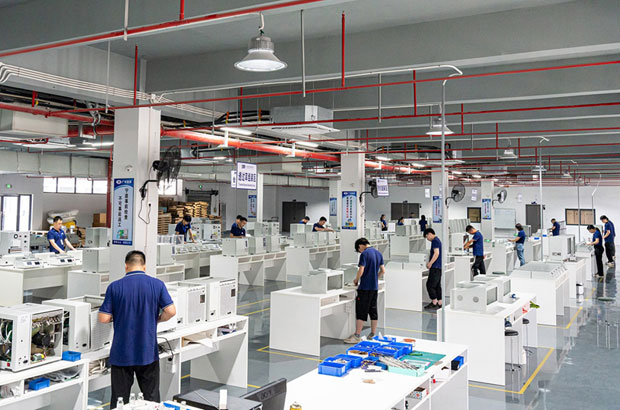
Our approach is different from companies that try to offer every possible testing method. We concentrate our R&D resources on the two most widely used and reliable methods for mainstream packaging:
By focusing deeply on these two core technologies, we deliver:
Our goal is not to sell the most expensive machine. It is to help you catch leaks before your customers do.
Seal integrity is never a "good enough" issue. It is a baseline requirement that protects your business.
The budget you save today by skipping a leak tester could turn into a six-figure recall bill tomorrow. But the time you invest in a scientific leak testing process becomes the strongest foundation for your brand reputation and customer trust.
Contact us today to receive three exclusive support benefits:
Don't wait until the customer complaint line starts ringing. A leak tester costs a fraction of even one small product recall — but it protects every bag of snacks, every blister pack, every sterile device, and every bottle that leaves your factory.
Let "leaking," "moisture damage," and "contamination" stay in someone else's story — not yours.
Contact Shounuo today to request your free sample test and consultation.
Previous article:Packaging Solvent Tester – Detect Odors Before They Reach Your Client
Next article:Food Packaging Water Vapor Transmission Rate Tester
Back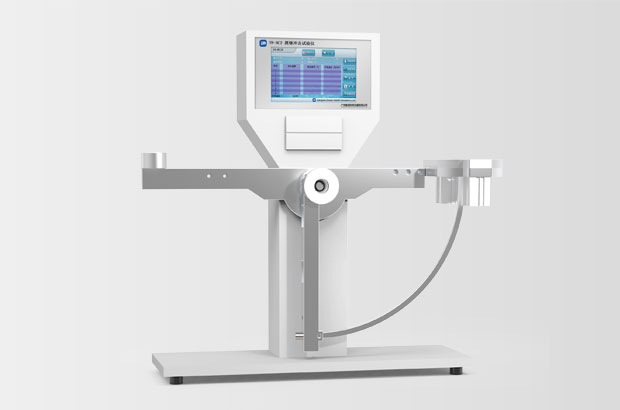
Pendulum Impact Tester for Flexible Packaging Film Toughness
08.10.2026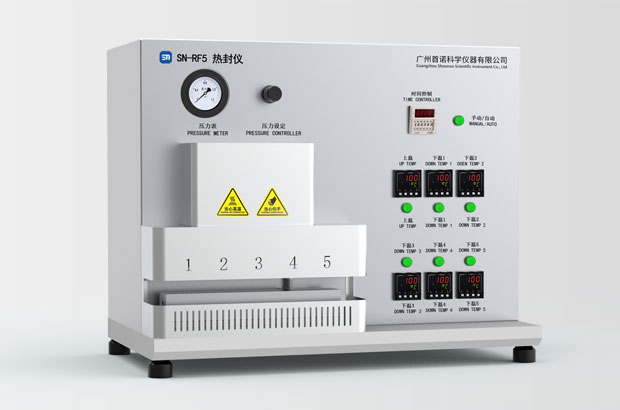
What Is a Heat Seal Tester? A Practical Guide for Flexible Packaging Labs
21.09.2026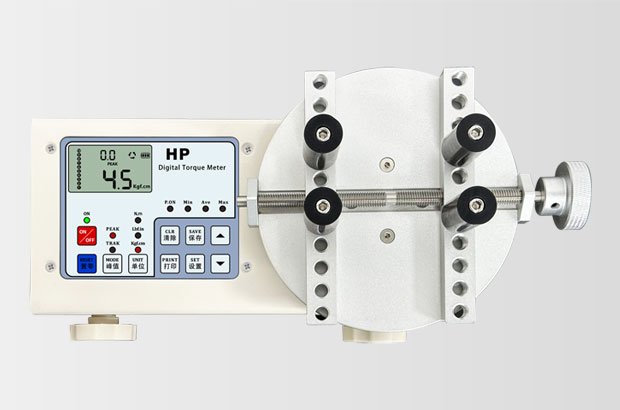
How to Choose a Bottle Cap Torque Tester: Range, Accuracy, Standards & Best Practices
14.09.2026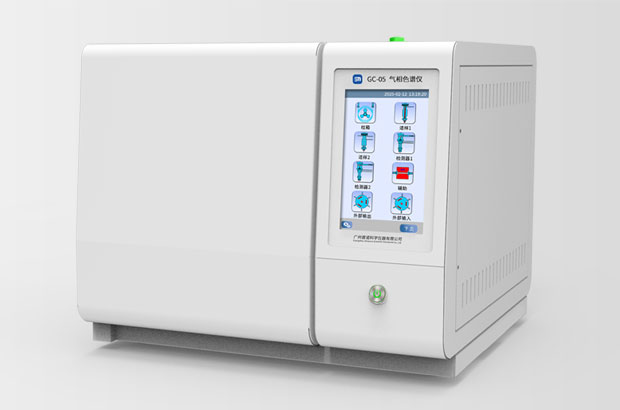
Packaging Solvent Tester – Detect Odors Before They Reach Your Client
07.09.2026Scan
Add WhatsApp
Email
info@snlabtester.com
Business Inquiry
+86 13316049470
Free Hotline
+86 020-26221916