In the field of barrier performance testing for flexible packaging materials, gas permeability testers and oxygen permeability testers are two common types of equipment. A frequent point of confusion is: since gas permeability testers (based on the differential pressure method) are already capable of measuring oxygen transmission rate, why do dedicated oxygen permeability testers (based on the coulometric method) still exist on the market? Do the two types overlap in function, and on what basis should one choose between them?
To answer these questions, we need to conduct an objective analysis from four perspectives: testing principle, data accuracy, standard applicability, and practical application scenarios.
Its core principle is the differential pressure method. During testing, a film specimen is placed between a high-pressure chamber and a low-pressure chamber. After evacuating both chambers, the test gas (e.g., oxygen, nitrogen, or carbon dioxide) is introduced into the high-pressure chamber, creating a constant pressure difference across the specimen. Gas molecules permeate through the film into the low-pressure chamber under the pressure difference, causing the pressure on the low-pressure side to rise. The instrument calculates the gas transmission rate by monitoring the rate of pressure change over time, combined with parameters such as the specimen area and thickness.
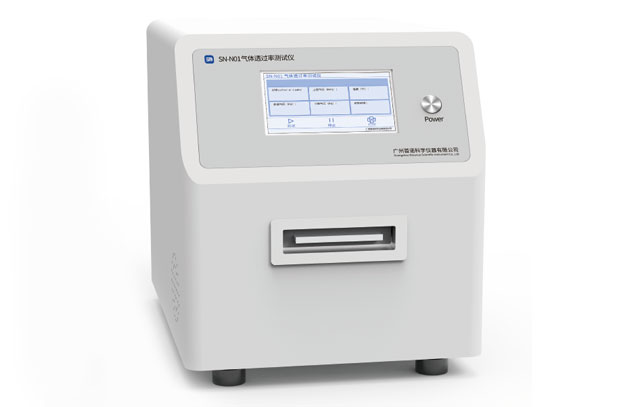
This method is suitable for a variety of gases (e.g., oxygen, carbon dioxide, nitrogen), offering strong versatility. However, its measurement is based on pressure change, placing extremely high demands on system sealing, temperature stability, and sensor sensitivity.
This method employs the coulometric method (also known as the isostatic method). During testing, the specimen divides the test cell into two independent flow channels: one side is purged with high-purity oxygen, while the other side is purged with high-purity nitrogen as a carrier gas. Oxygen that permeates through the specimen is carried by the nitrogen into a coulometric oxygen sensor, where an electrochemical reaction generates a current signal proportional to the oxygen concentration, thereby precisely determining the oxygen transmission rate.
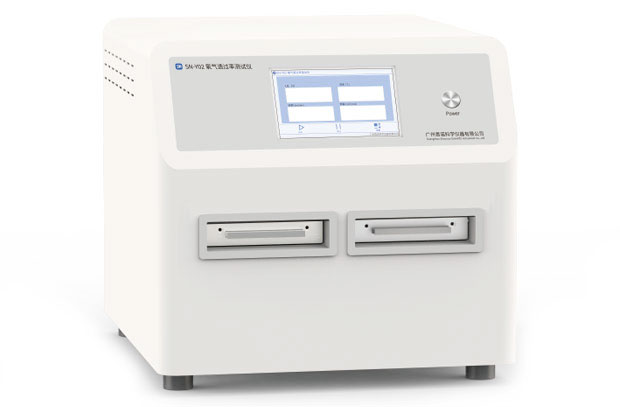
This method responds only to oxygen and is not affected by other gases or water vapor. Its lower detection limit is far below that of the differential pressure method.
From a technical standpoint, while a gas permeability tester can measure oxygen, this does not mean it can fully replace a dedicated oxygen permeability tester. The main reasons lie in differences in measurement accuracy and application range.
This is particularly evident when testing high-barrier materials. Take aluminum foil laminates, alumina-coated films, or high-barrier EVOH co-extruded films as examples: their oxygen transmission rates are often below 1 cm³/(m²·24h), sometimes even below 0.01 cm³/(m²·24h). For differential pressure instruments, such minute permeation results in an extremely small pressure change on the low-pressure side, which can easily be masked by system leakage, temperature fluctuations, or sensor drift.
In actual testing, data from differential pressure methods on the same batch of high-barrier samples often show high variability, and repeatability fails to meet quality control requirements.
Coulometric instruments are different. Their sensor directly "counts" the number of oxygen molecules permeating through the specimen. The signal has a linear relationship with oxygen concentration, offering a high signal-to-noise ratio and enabling stable detection of transmission rates as low as 0.005 cm³/(m²·24h). This is why many international and national standards (e.g., ASTM D3985, GB/T 19789) designate the coulometric method as the arbitration method for determining the oxygen transmission rate of high-barrier materials.
Before testing, the differential pressure method requires evacuating the system to below 10 Pa. This process often takes 4 to 8 hours. Combined with the time needed for permeation equilibrium and the test itself, the overall test cycle is relatively long. In contrast, the coulometric method requires no vacuum evacuation, and the equilibration time is typically 2 to 6 hours, resulting in higher overall testing efficiency.
Given the differences above, the two types of equipment are not simply substitutes for each other; rather, each has its own focus.
Gas Permeability Tester: Its advantage lies in switchable test gases. One instrument can measure the transmission rates of various gases such as oxygen, nitrogen, and carbon dioxide, making it suitable for material development, formulation comparison, and comprehensive evaluation of barrier performance against multiple gases. For materials with medium-to-high transmission rates (e.g., ordinary PE, PP, PET, PA), the differential pressure method fully meets accuracy requirements, and the equipment cost is relatively low.
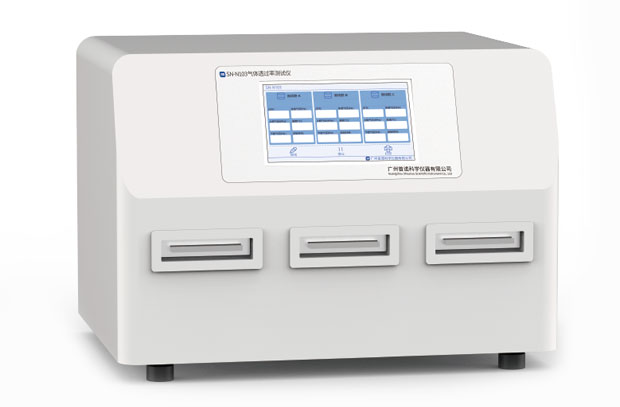
Oxygen Permeability Tester: It is dedicated to the precise measurement of oxygen barrier performance, especially in scenarios involving high-barrier material testing, pharmaceutical packaging, medical device packaging, electronic device encapsulation, and applications requiring compliance with ASTM standards or pharmaceutical packaging material standards. If a company's products are primarily high-barrier materials, or if it frequently faces quality control demands for low-transmission-rate samples, a dedicated oxygen permeability tester is a necessary investment.
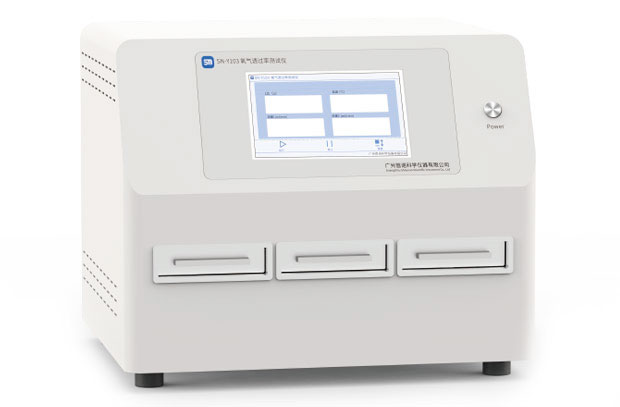
When procuring equipment, it is advisable to make decisions based on answers to the following key questions.
If the transmission rate is above 100 cm³/(m²·24h), a differential pressure instrument can handle the task.
If it is between 1 and 100, either type can be used, but the coulometric method yields more stable data.
If it is below 1, priority should be given to the coulometric instrument.
If development or quality control requires transmission rate data for nitrogen, carbon dioxide, or air, then a differential pressure gas permeability tester (or both types of equipment) must be available.
Pharmaceutical packaging, medical device packaging, and food packaging exported to Europe or the United States typically explicitly require the coulometric method (ASTM D3985 or GB/T 19789). In such cases, only a dedicated oxygen permeability tester will suffice.
If testing only according to GB/T 1038 (differential pressure method) for routine inspection, a differential pressure instrument meets the requirements.
Differential pressure instruments have a lower procurement cost, suitable for laboratories with limited budgets that primarily test conventional materials.
Coulometric instruments are more expensive but offer better testing efficiency and data reliability, making them suitable for high-demand, high-throughput quality control scenarios.
The differences in principles between gas permeability testers and oxygen permeability testers determine their respective technical positioning. The former, characterized by "multi-gas versatility," is suitable for routine testing and comprehensive research. The latter, centered on "high-precision specialization," is a reliable tool for measuring the oxygen transmission rate of high-barrier materials.
When selecting equipment, one should not simply pursue a multitude of functions, but rather make a rational choice based on the barrier level of the materials in question, applicable testing standards, and actual testing needs. Proper equipment selection is the first step toward obtaining reliable test data.
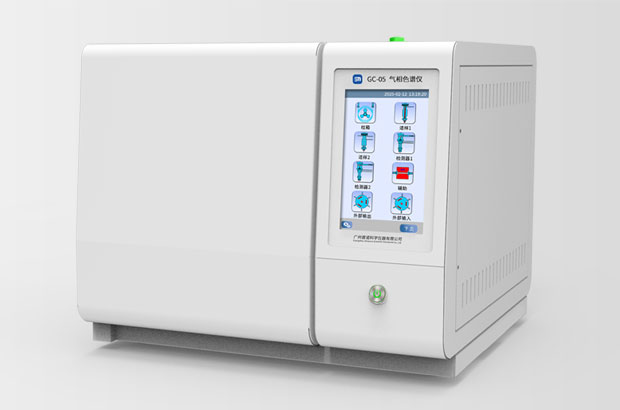
Packaging Solvent Tester – Detect Odors Before They Reach Your Client
07.09.2026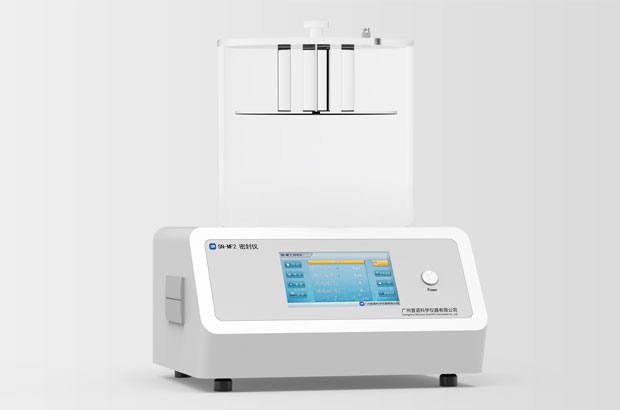
Package Leak Tester: Stop Costly Leaks Before They Happen
31.08.2026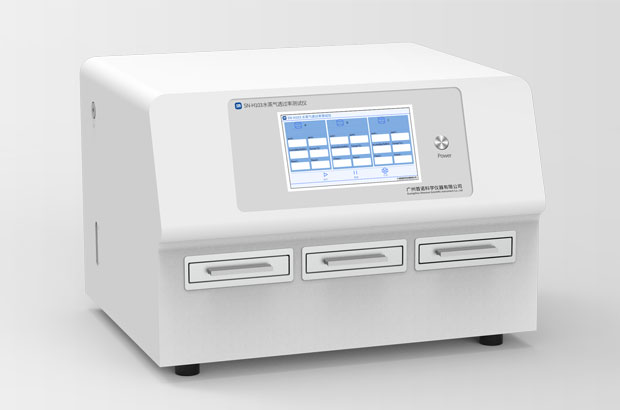
Food Packaging Water Vapor Transmission Rate Tester
24.08.2026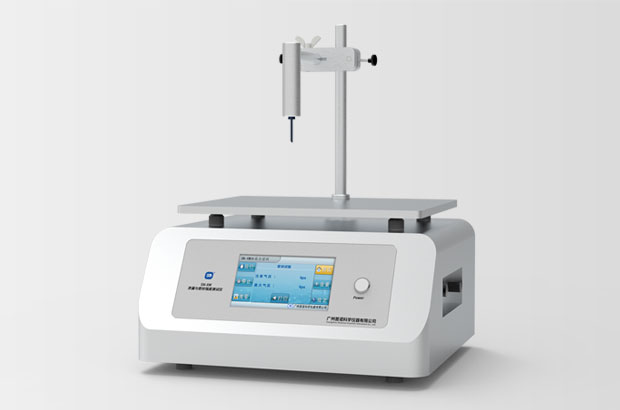
Positive Pressure Seal Tester for Leak and Seal Strength Testing | ASTM F1140 & ISO 11607 Compliant
17.08.2026Scan
Add WhatsApp
Email
info@snlabtester.com
Business Inquiry
+86 13316049470
Free Hotline
+86 020-26221916