In packaging quality control for industries such as food, pharmaceuticals, and medical devices, the seal tester is an indispensable piece of equipment. Among various testing methods, the negative pressure seal tester has become one of the most widely used seal integrity testing tools in many countries due to its simplicity, intuitive results, and low cost. So, how does a negative pressure seal tester detect package integrity? What is its working principle, and how do you operate it? This article provides a comprehensive explanation from principles, steps, applications, to frequently asked questions.
A negative pressure seal tester (also known as a vacuum seal tester or package integrity tester) is a device specifically designed to evaluate the sealing performance of flexible packaging. It is widely used for testing bags, bottles, tubes, cans, and boxes in the food, pharmaceutical, medical device, daily chemical, electronics, and stationery industries. The test effectively compares and evaluates the sealing process and performance of flexible packaging, provides scientific data for setting relevant technical specifications, and can also be used to check seal integrity after drop or compression tests.
The core of how a negative pressure seal tester detects package integrity lies in the concept of “negative pressure”. Simply put, the instrument creates a vacuum inside the test chamber, generating a pressure difference between the inside and outside of the package. If there is a tiny leak, the internal gas will escape through the leak point due to the pressure differential, and this can be detected by the operator or sensors.
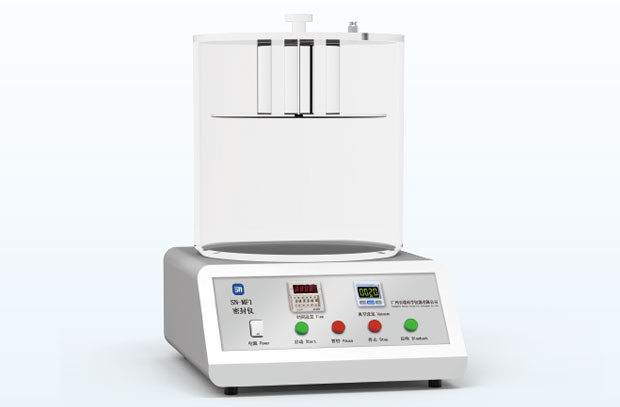
Specifically, the working principle is: a vacuum pump removes air from the test chamber, creating negative pressure around the package. If the package has a leak, air will enter the package through the leak to equalize the pressure. The tester determines whether a leak exists by monitoring pressure changes or by direct observation.
Two common detection methods:
Method 1: Underwater bubble test. The sample is submerged in water and vacuum is applied, creating an internal-external pressure difference. The operator observes whether gas bubbles continuously escape from the sample inside the vacuum chamber – this indicates a leak.
Method 2: Deformation observation. The vacuum chamber is evacuated, creating a pressure difference that causes the sample to expand. After releasing the vacuum, the recovery of the sample’s shape is observed. A qualified package should show no continuous bubbles during vacuum, and no water ingress upon opening.
Standardized operation is essential for accurate results. Below are the typical seal tester operating steps.
Step 1: Preparation. Ensure all components are tightly connected and leak-free. Check the vacuum pump. Add water to the vacuum chamber until the water level is 1–3 cm above the sample rack. Connect compressed air and vacuum lines properly, and adjust the pressure regulator to maintain an inlet pressure of 0.6–0.8 MPa for test stability.
Step 2: Parameter setting and sample placement. Set the desired vacuum level and dwell time via the touch screen. Vacuum levels can be selected from 20, 30, 50, or 90 kPa depending on the sample characteristics. For general flexible packaging, –80 kPa and a dwell time of 30 seconds are common. Place the test sample into the vacuum chamber, submerge it using the mesh rack (seal edges facing up, no folding). Close and lock the chamber lid.
Step 3: Perform the test. Press the start button. The instrument evacuates the chamber. When the set vacuum level is reached, the timer starts the dwell phase. During this phase, closely observe whether continuous bubbles escape from the sample (indicating a leak) or monitor expansion and shape recovery. Continuous bubbles during vacuum or dwell indicate a leak; isolated single bubbles are not considered a leak.
Step 4: Result analysis and cleanup. After the test, the instrument automatically releases vacuum. Based on observations and recorded data, determine whether the sample passes. Open the air intake valve to equalize pressure, remove the sample, wipe off surface water, and open the package to check for water ingress. Record the results and clean the vacuum chamber.
The negative pressure seal tester is widely used. Food industry: testing chip bags, vacuum-packed meats to prevent oxidation and spoilage. Pharmaceutical industry: seal verification of blister packs, infusion bags. Daily chemical industry: leakage detection for shampoo and lotion packaging. Medical device industry: seal integrity testing for sterile device packaging. Additionally, the device can re-test packages after drop or compression tests to evaluate transport resistance.
When discussing package integrity testing methods, national standards are essential. On August 1, 2025, the new standard GB/T 15171-2025 “Test methods for seal integrity of packaging” was released and officially replaced the 30-year-old GB/T 15171-1994 as of February 1, 2026.
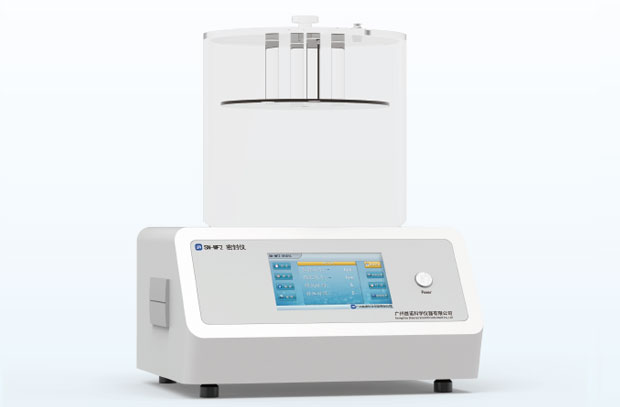
Key changes compared to the old version: (1) Renamed the original method as “underwater bubble method”; (2) Added a new “vacuum decay method”. This revision expands applicability from only flexible packaging to all types including flexible, semi-rigid, and rigid packaging. Most mainstream negative pressure seal testers on the market comply with GB/T 15171, and some also meet ASTM D3078, YBB, and other international standards.
Q: Does a small bubble during the negative pressure test automatically mean the package fails?
A: Not necessarily. First rule out interference factors such as bubbles adhering to the sample surface, residual moisture, or improper test parameters (excessive vacuum, too long dwell time). After eliminating these, if stable continuous bubbles persist, a leak is likely.
Q: Do different packaging materials require different test parameters?
A: Yes. Soft plastic composite films withstand lower vacuum levels; dwell time is typically 10–30 seconds. Rigid bottles or cans can tolerate higher vacuum levels, with dwell time extended to 30–60 seconds.
Operational precautions:
Ensure the package is intact before testing.
Keep the sample stable during testing to avoid breakage.
Select appropriate test pressure and time based on material and thickness.
Always release vacuum before opening the chamber to prevent deformation.
Calibrate the device regularly – annually is recommended.
Through the above explanation, we hope you now fully understand how a negative pressure seal tester detects package integrity. From working principle to operating steps, from application fields to standards, the negative pressure seal tester has become a reliable tool for quality control in food, pharmaceutical, and daily chemical industries. Mastering correct operation and troubleshooting is key to controlling product quality and reducing customer complaints.
If you are selecting a package integrity testing solution for your business, start by understanding the negative pressure seal tester – add an extra layer of safety to your products.
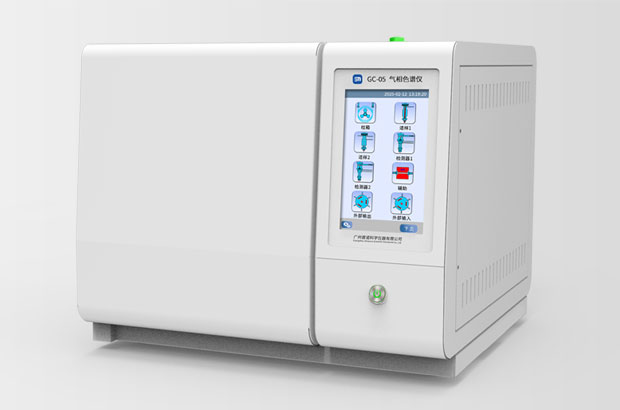
Packaging Solvent Tester – Detect Odors Before They Reach Your Client
07.09.2026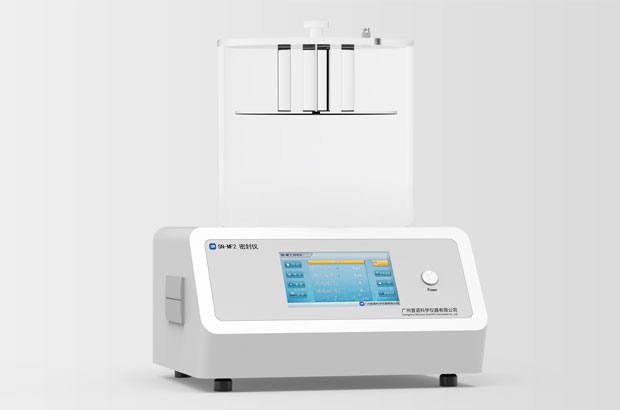
Package Leak Tester: Stop Costly Leaks Before They Happen
31.08.2026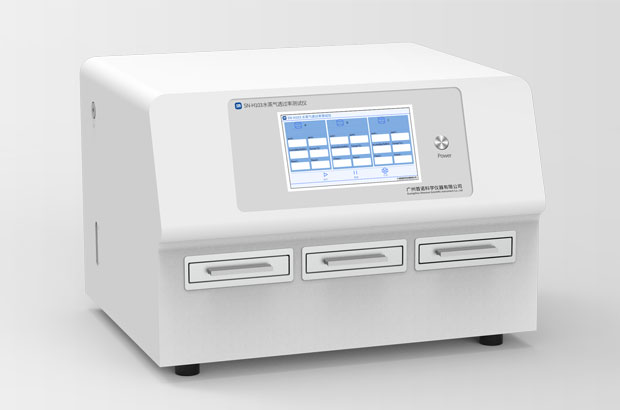
Food Packaging Water Vapor Transmission Rate Tester
24.08.2026
Positive Pressure Seal Tester for Leak and Seal Strength Testing | ASTM F1140 & ISO 11607 Compliant
17.08.2026Scan
Add WhatsApp
Email
info@snlabtester.com
Business Inquiry
+86 13316049470
Free Hotline
+86 020-26221916